
Related service
Shopify development
Store set-up, changes the editor can’t do, and fixes, from a small task to a new store.
See how Shopify work goes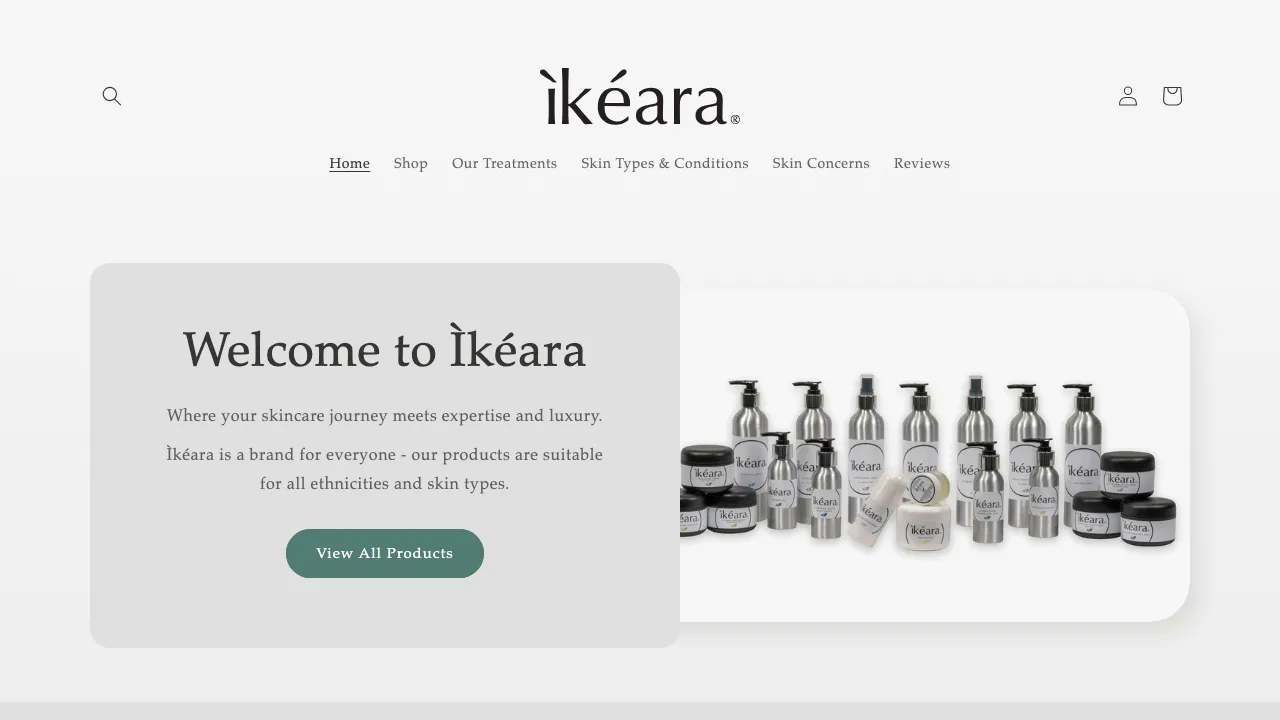
In August 2023, Omowumi Overton was getting ready to launch Ikeara, a new natural skincare brand, and needed a simple online shop. It had to cover a home page, a range page, a page for each of about 20 products, checkout, contact and about pages, in a clean black, white and grey look with a simple layout.
She had a list of practical questions about revisions, running costs, adding products and who handles technical problems. I answered each one, and explained the choice between Shopify and WooCommerce without jargon: both can look the same, and the real difference is how the shop is run behind the scenes.
I recommended Shopify with an official template designed for cosmetics, customised to her brand, because it’s flexible, well supported and easy to switch later if her needs change. I also explained why a bespoke design wasn’t necessary at that stage.
After a call to talk it through, I sent a written quote: a fixed set-up price with a deposit to start and the balance when the shop went live, an explanation of Shopify’s own monthly fee, and options for any later work, either hourly or as a discounted monthly block. She would own the shop outright, with no contract, and be free to work with someone else at any point.
I helped Omowumi buy her own domain name, and recommended she hold it herself, because the domain is effectively the key to the website. I included the first year’s cost in my quote.
Her trademarked brand name uses accented characters, and I found that a domain name can only include them by choosing from a list of languages, none of which matched. I explained the options and recommended an English-character domain, while keeping the accented spelling in the logo and across the site’s text and images, so the brand still matches her trademark. The build began in late October 2023, once her business name was confirmed.
By November 2023 I had built a password-protected demo store on Shopify with her logo, her first content and customised theme colours, so she could share it with family and gather feedback before anything went live. I suggested adding a real colour rather than relying on greys and whites, and offered to take colours from any palette, photos or links she liked.
I set up the store on a cosmetics template, customised with her logo, colours, imagery and text, and added her products so she could start selling online.
Omowumi runs treatments and often can’t answer the phone, so we organised the shop so customers can find the right product themselves. They can browse by skin type and concern, including a dedicated men’s skin health page, or by product type such as cleansers, masks and moisturisers, with only the relevant products on each page.
Over several rounds of feedback I added a deep green, taken from the aloe vera plant, for headings and the announcement bar, and adjusted lettering sizes on the product pages. Where she wanted the brand video moved higher, I gave honest advice: keep the introduction and the skin-type shortcuts first so visitors don’t miss them, and show the video on other pages as well.
I set up logins for the people who would edit content and manage orders. While the shop was still behind a password, her printer needed a QR code for price lists, business cards and gift vouchers. I confirmed it could point to the live address from the start, because the password screen simply disappears at launch.
She asked how to take payments online and in person, and how to post orders. I recommended Shopify Payments as the simplest option, with Shopify’s point-of-sale app and card reader for in-person sales and PayPal or Amazon Pay as extras, and explained the shipping options through Shopify and Royal Mail’s Click & Drop. Later I explained Shopify’s card fees so she could compare them with her bank’s offer.
When she asked about designing her product labels, I said honestly that print design was outside my experience, and suggested printers with in-house design teams, who would also save her coordinating a designer and a printer separately.
Omowumi still gets in touch when she needs updates to the website and products, and I help as needed. In the weeks after launch the jobs included:
Rather than set up a monthly arrangement, Omowumi preferred to ask for an estimate each time and decide whether to go ahead. Each job is a short, agreed block of work with a single invoice, and she is free to do any of it herself.
“I needed a website for my new skincare brand, and shortlisted Jack from a long list of web design companies. Jack was absolutely fantastic from start to finish! He was very helpful with advice. He was reliable, understanding, and customer service was faultless. Jack worked very hard to produce a fab result. Really good price, made everything super easy, can’t recommend more highly!! I am very happy with my website, and will definitely be working with Jack again in the future.”
Store set-up, changes the editor can’t do, and fixes, from a small task to a new store.
See how Shopify work goesExamples across websites, ecommerce, integrations and maintenance.
All recent workTell me what you want to sell and include a website link if you have one. I’ll reply with any questions and confirm whether I can help.